
The Dominion Astrophysical Observatory


-
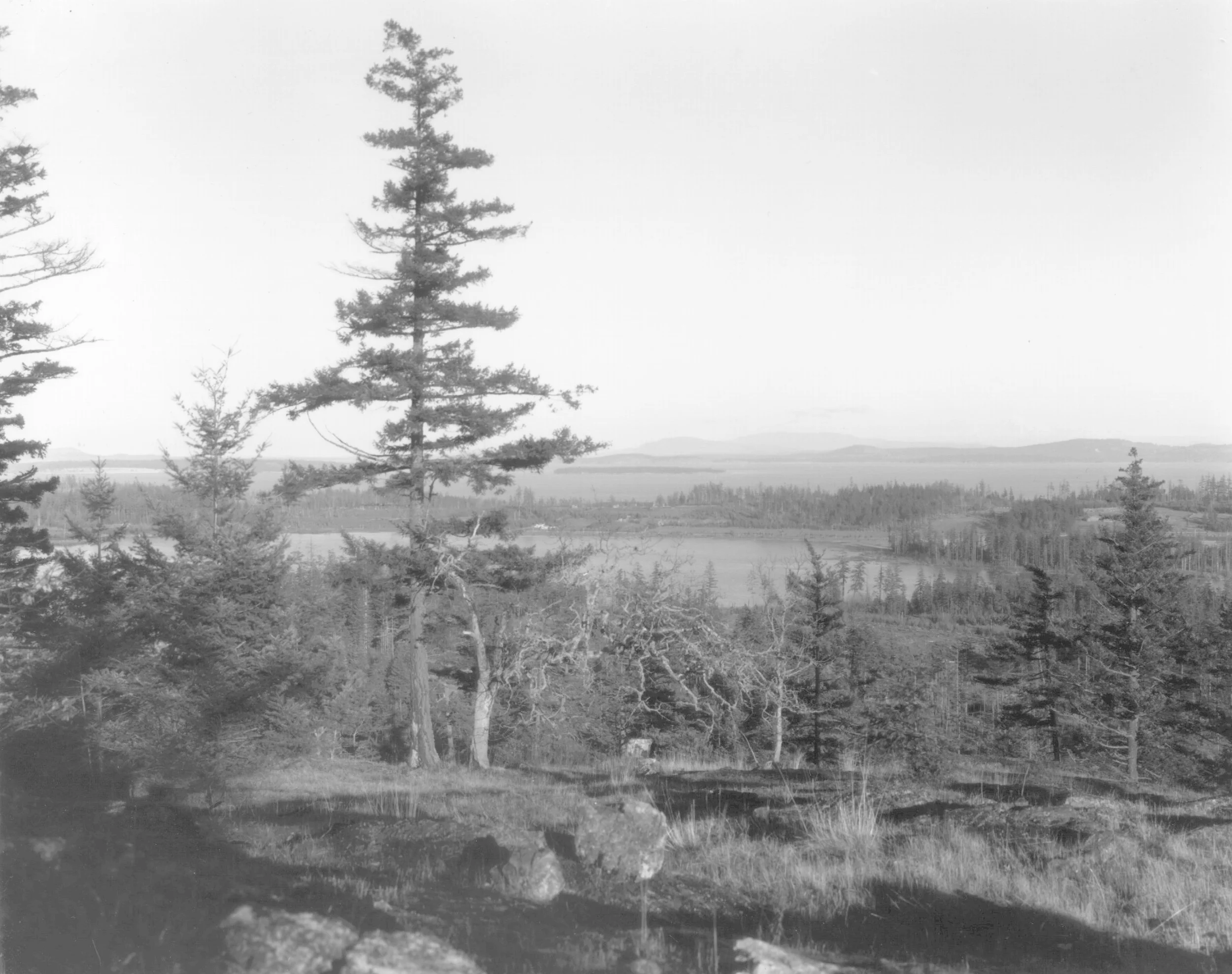
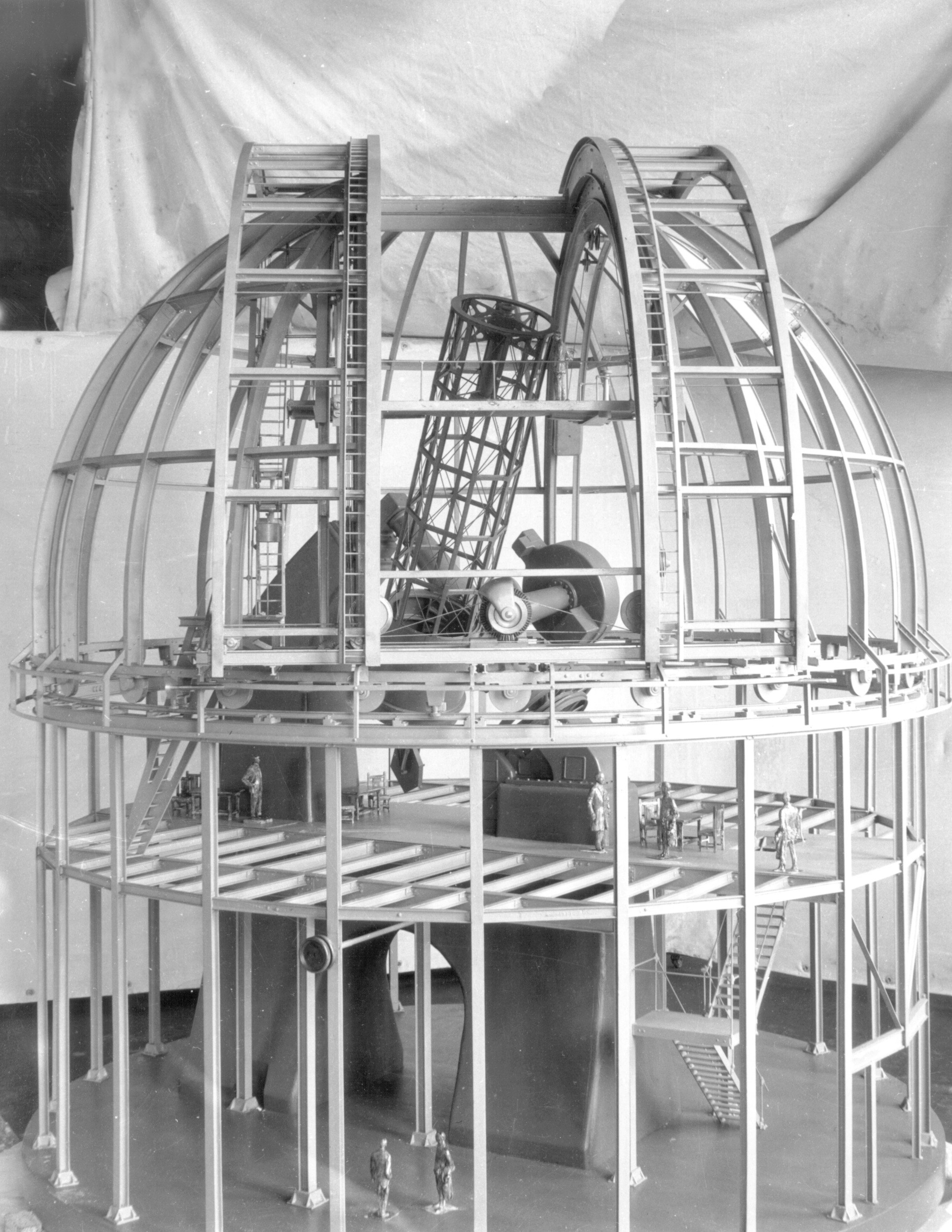
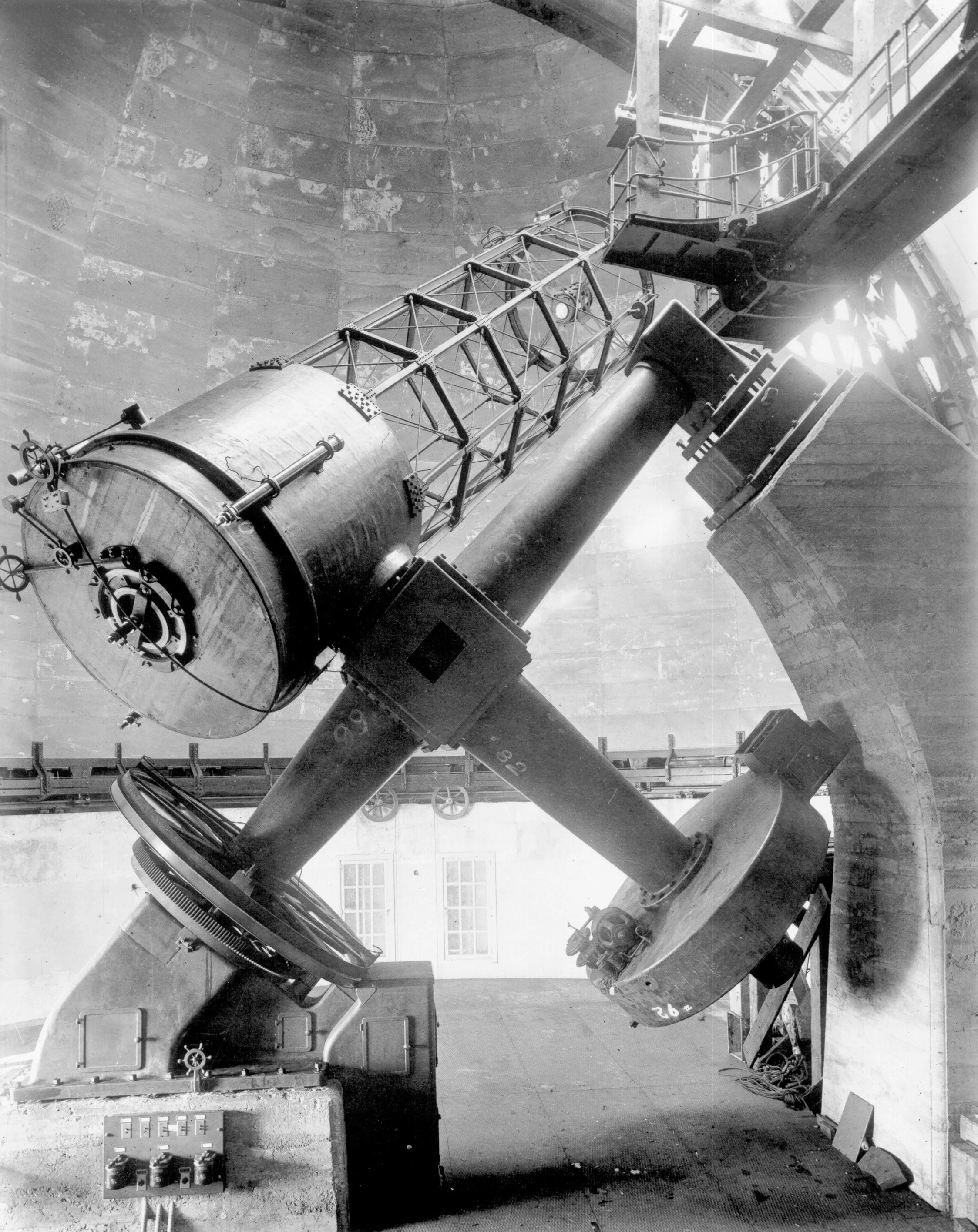
In 1910, Canadian astronomer John Stanley Plaskett developed a bold vision to put Canada at the forefront of modern astrophysics with a 'great' reflecting telescope, culminating in the construction of the Dominion Astrophysical Observatory (DAO) in Victoria, BC.
In 1913, the Canadian federal government formally approved Victoria as the location for the proposed 1.8-m (72" ) reflector, intended to be the largest in the world. Residents welcomed the institution, with the May 13, 1914 Colonist remarking that "nothing can add more to the attractiveness of the city," and "Victoria will become a scientific centre."
The new project fostered interest from scientists and the public alike, as Victorians expressed support for the proposed facility. Premier Richard McBride and the Province of British Columbia welcomed the opportunities presented by the unprecedented instrument, financing the purchase of the property and building a road for the new observatory.
-
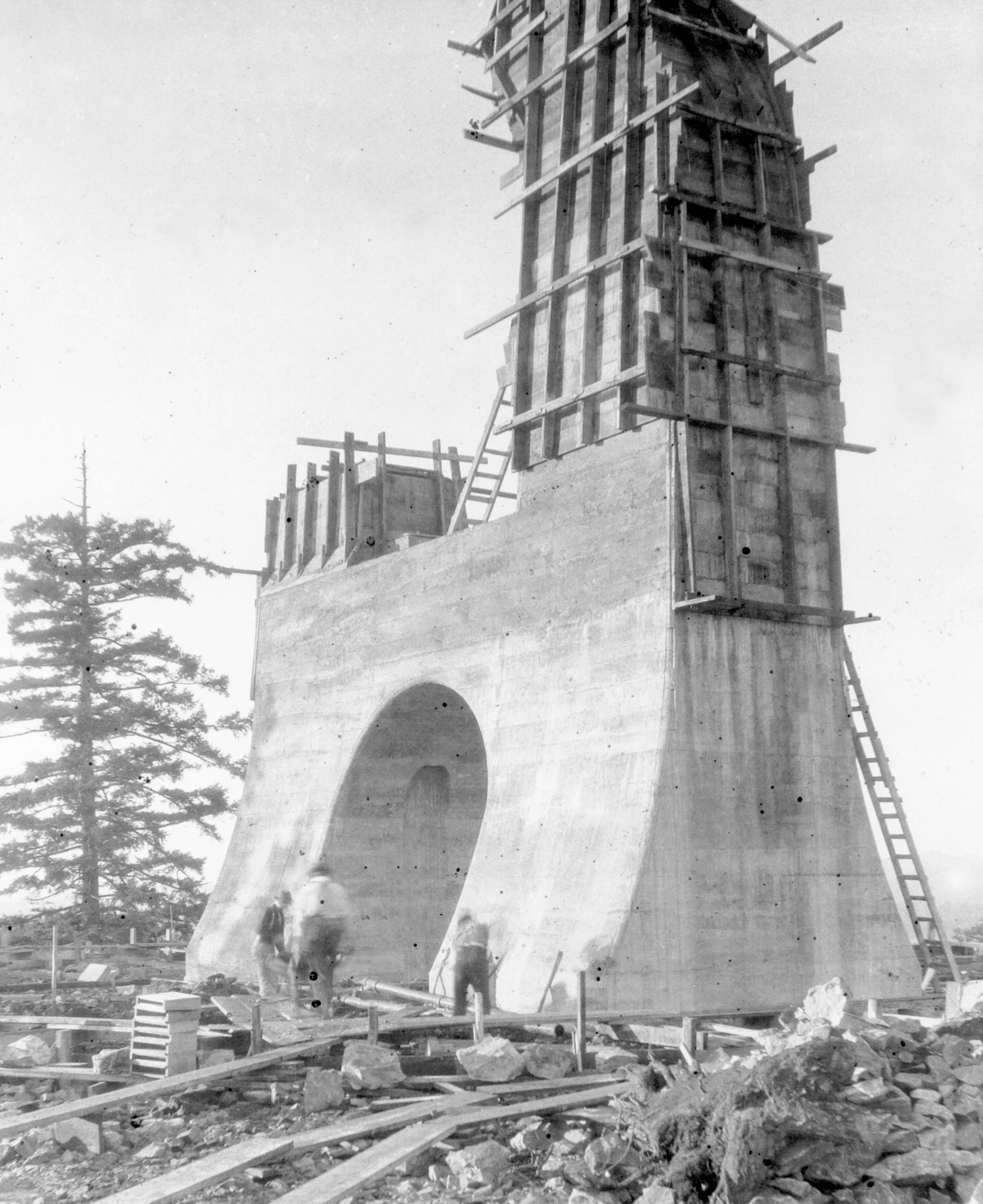
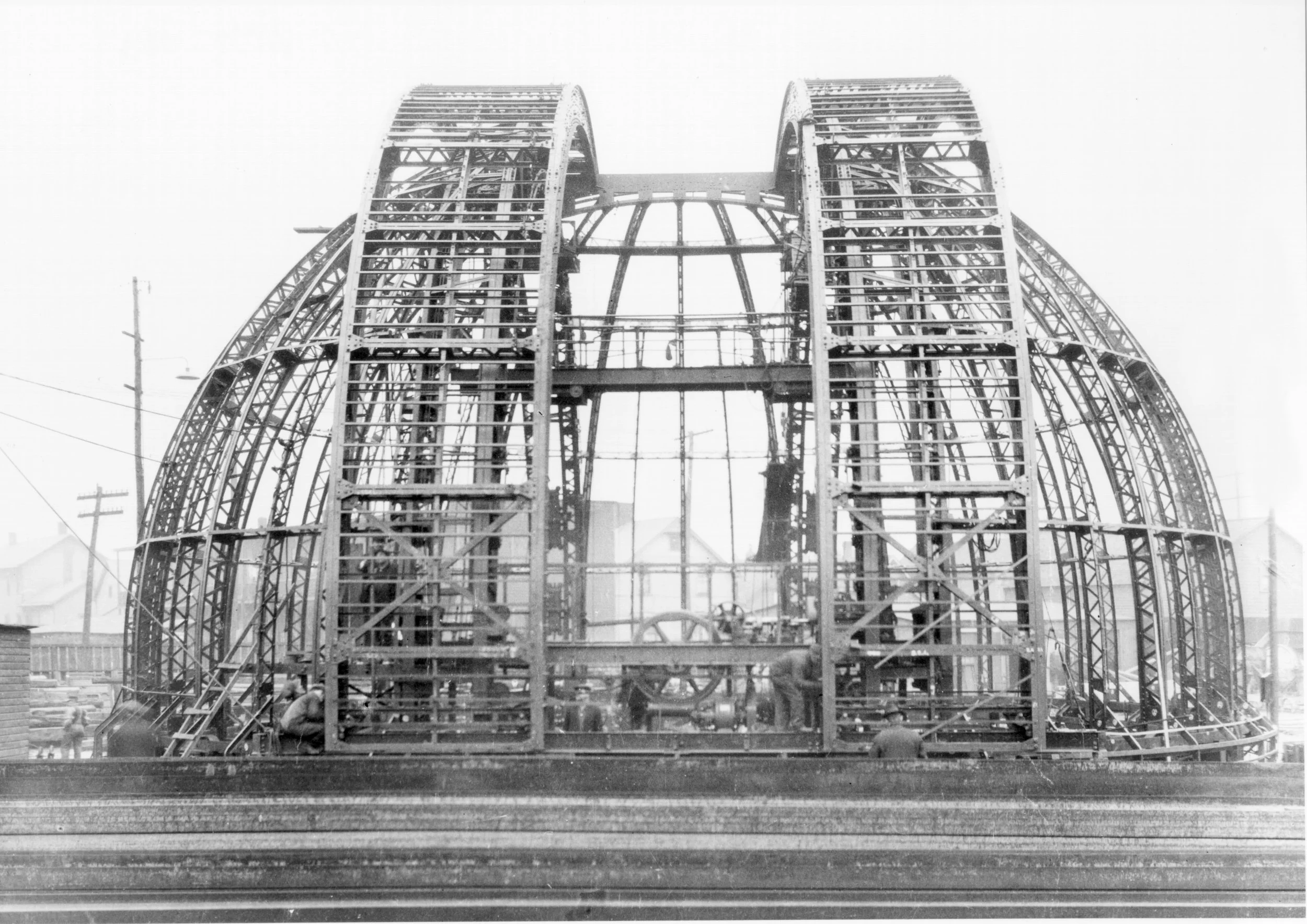
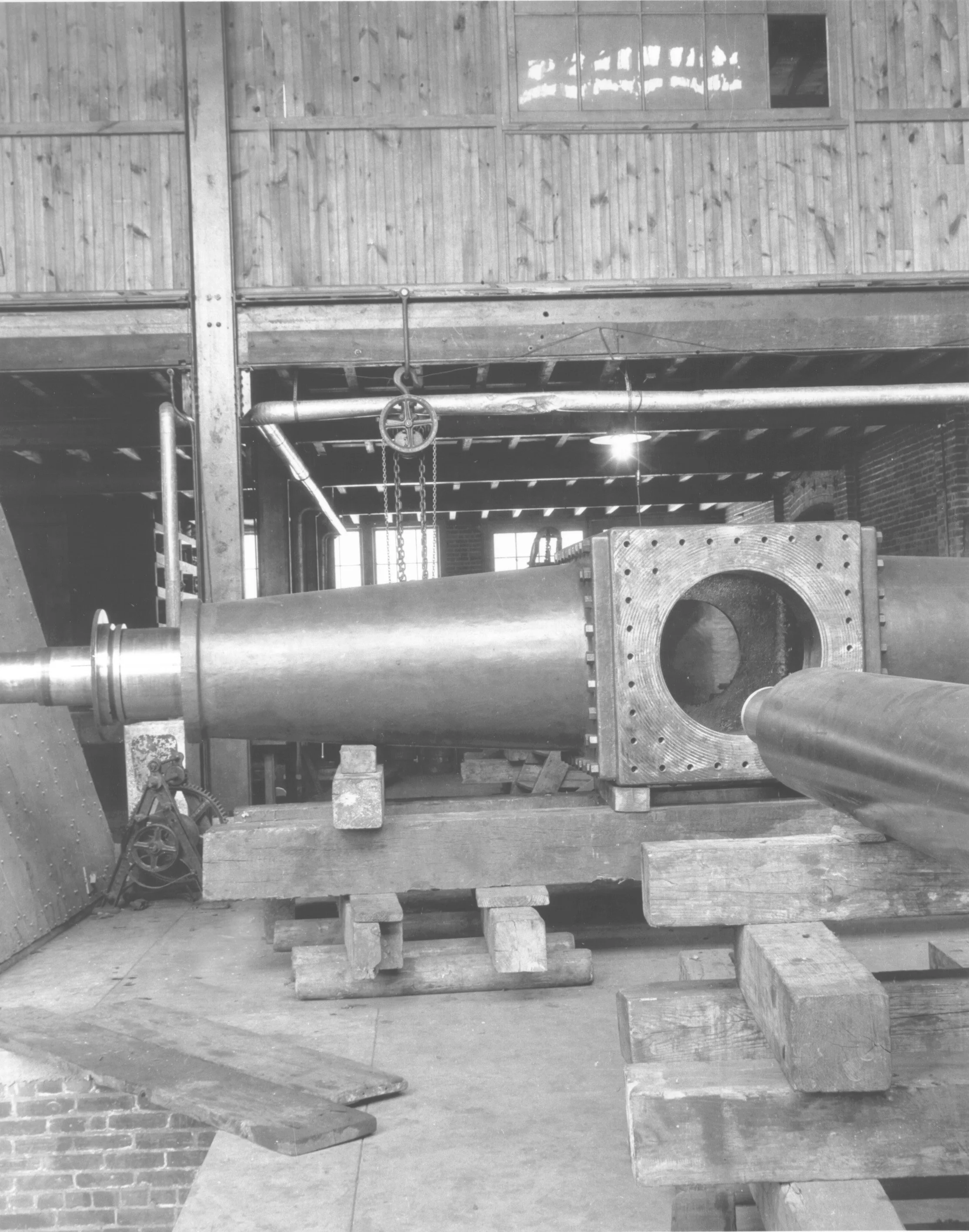
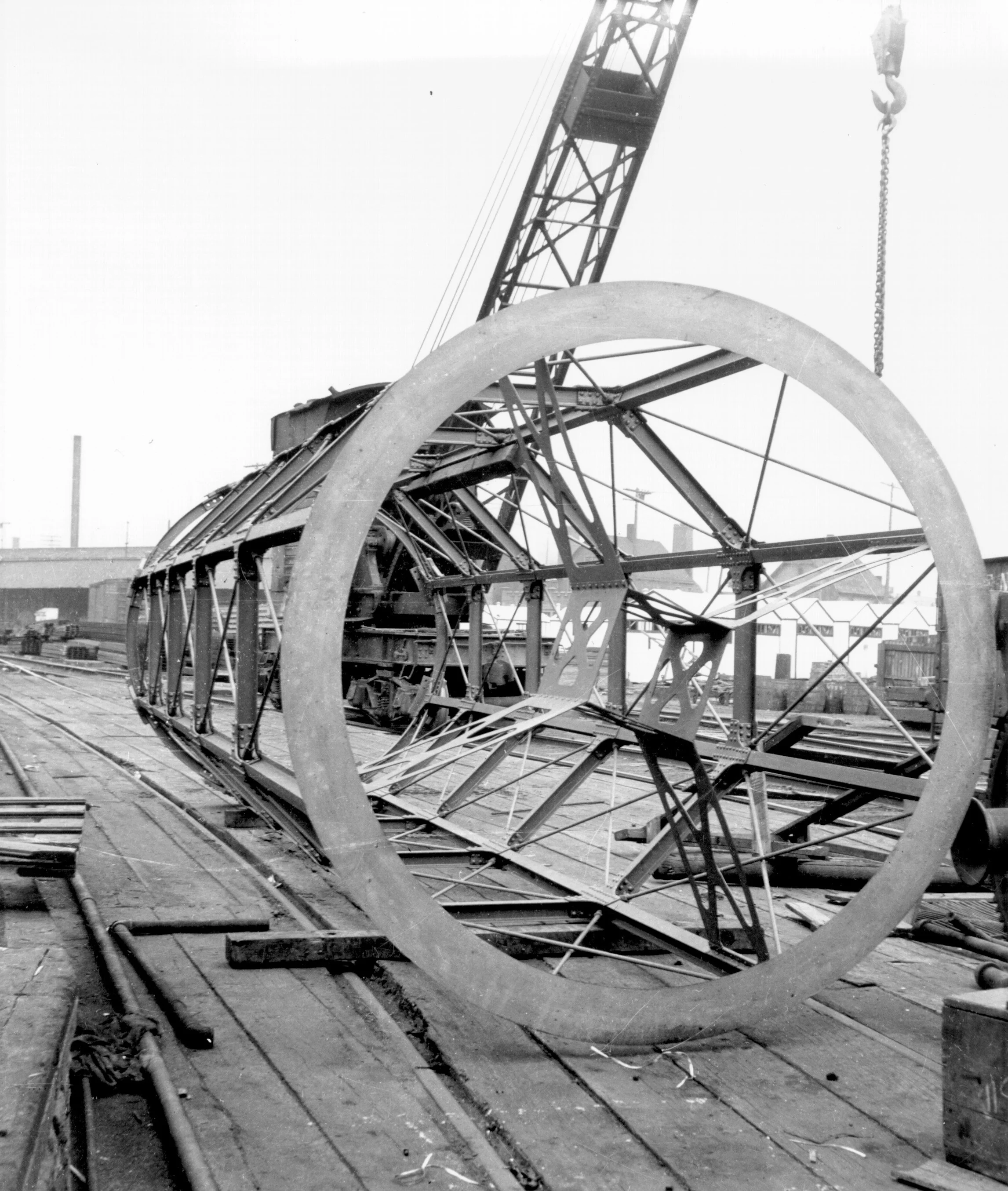
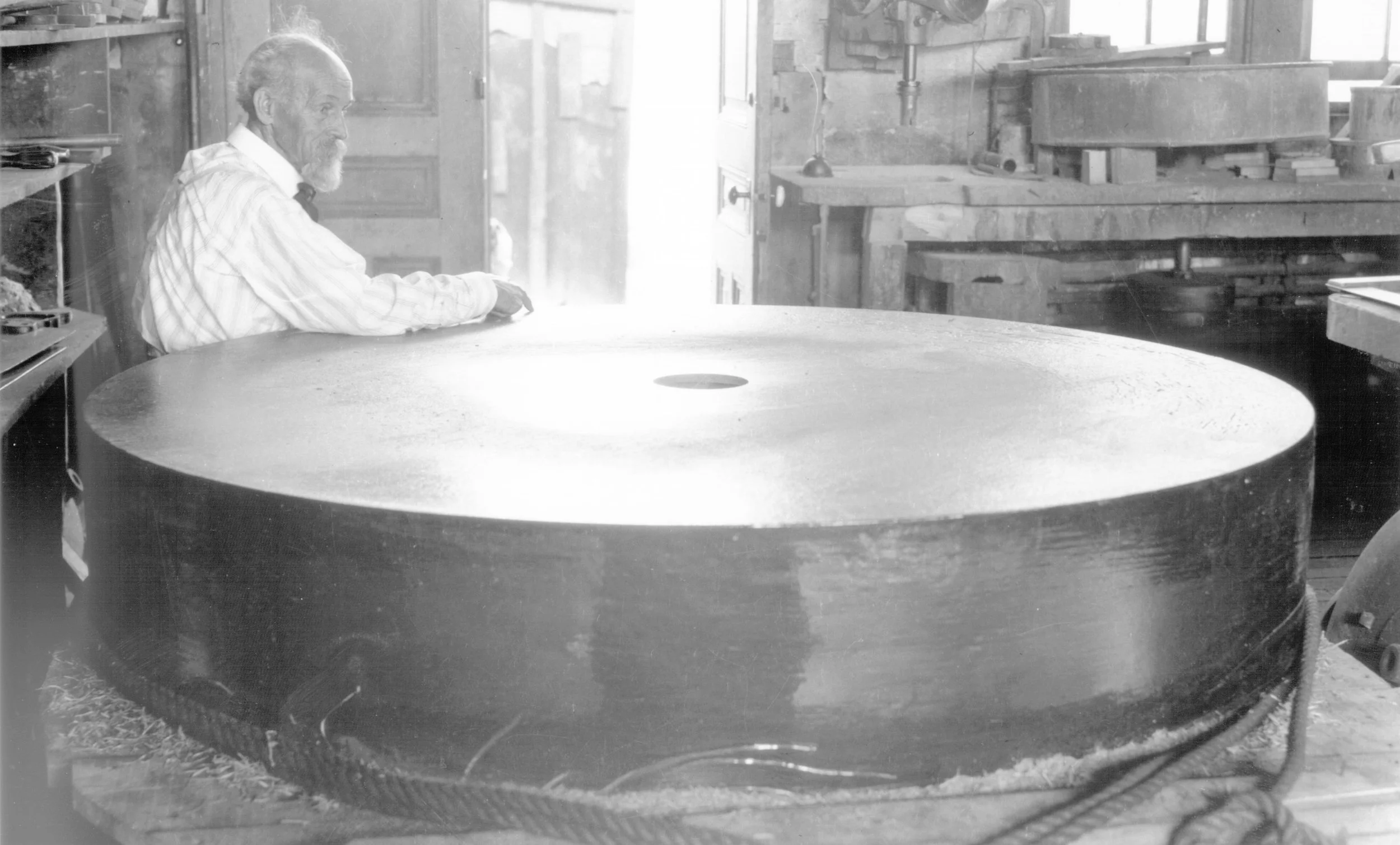
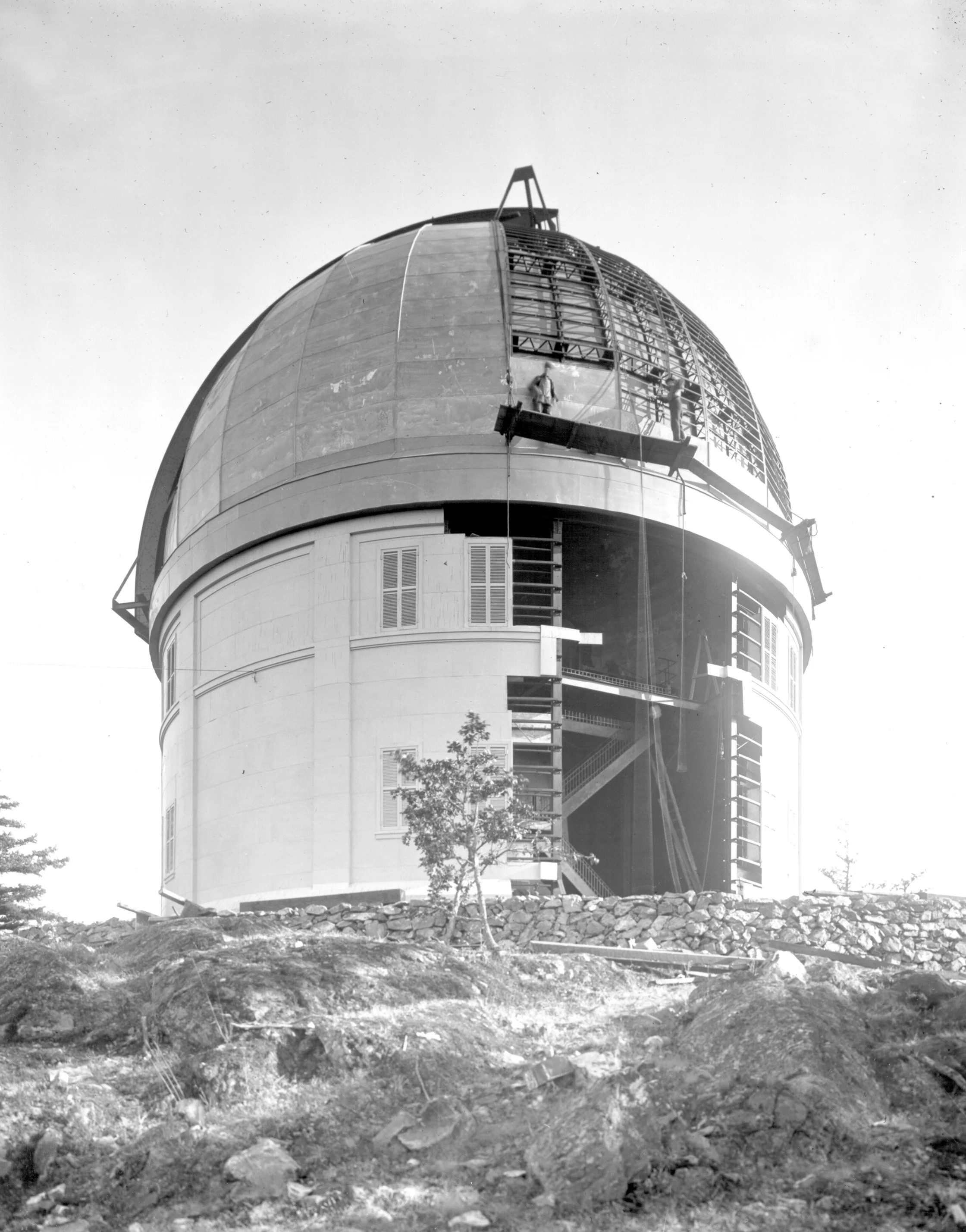
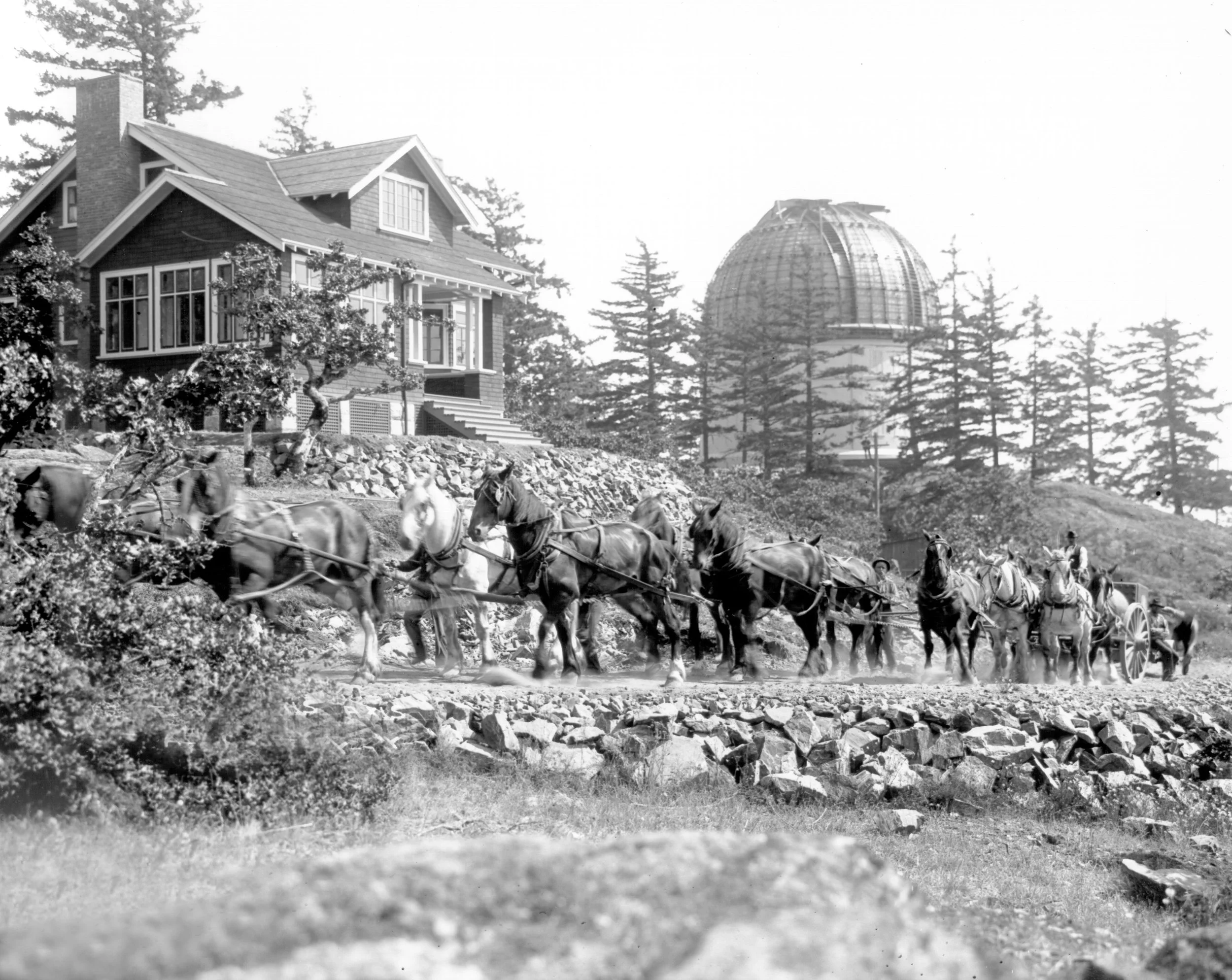
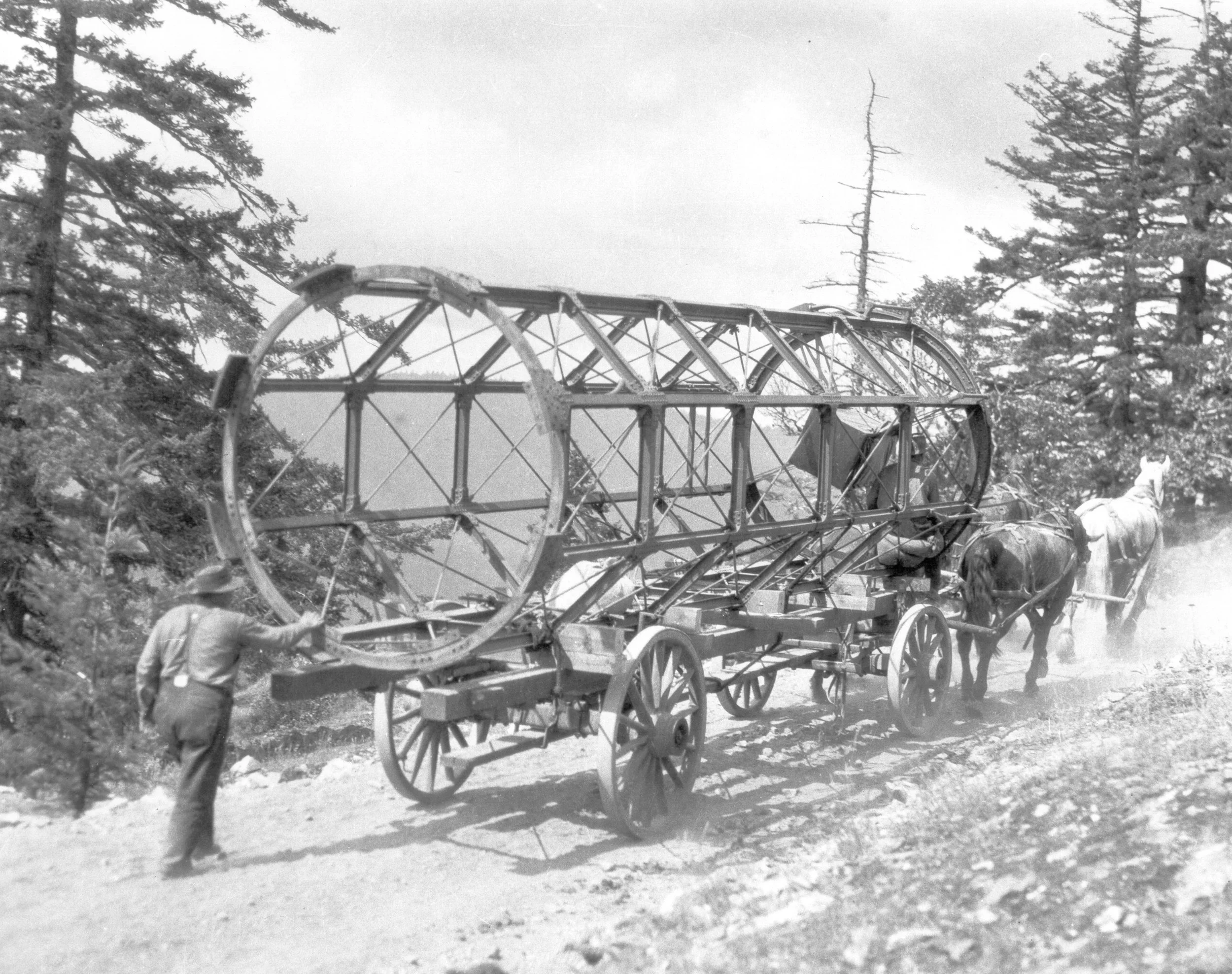
Despite the difficulties imposed by the First World War, construction proceeded rapidly, with growing anticipation from the national and international scientific communities. Materials were transported up the hill by horse and wagon. The 5,000-pound mirror barely escaped the destruction of the Great War, and was shipped from Antwerp just one week before the conflict broke out. The building and telescope mounting were ready by the fall of 1916, but the project was delayed by issues the figuring of the large mirror for the telescope.
While the mirror had been shipped before the war, an auxiliary piece of optics was not. This introduced delays in testing the mirror. Other problems in figuring the very large mirror also contributed to the delay
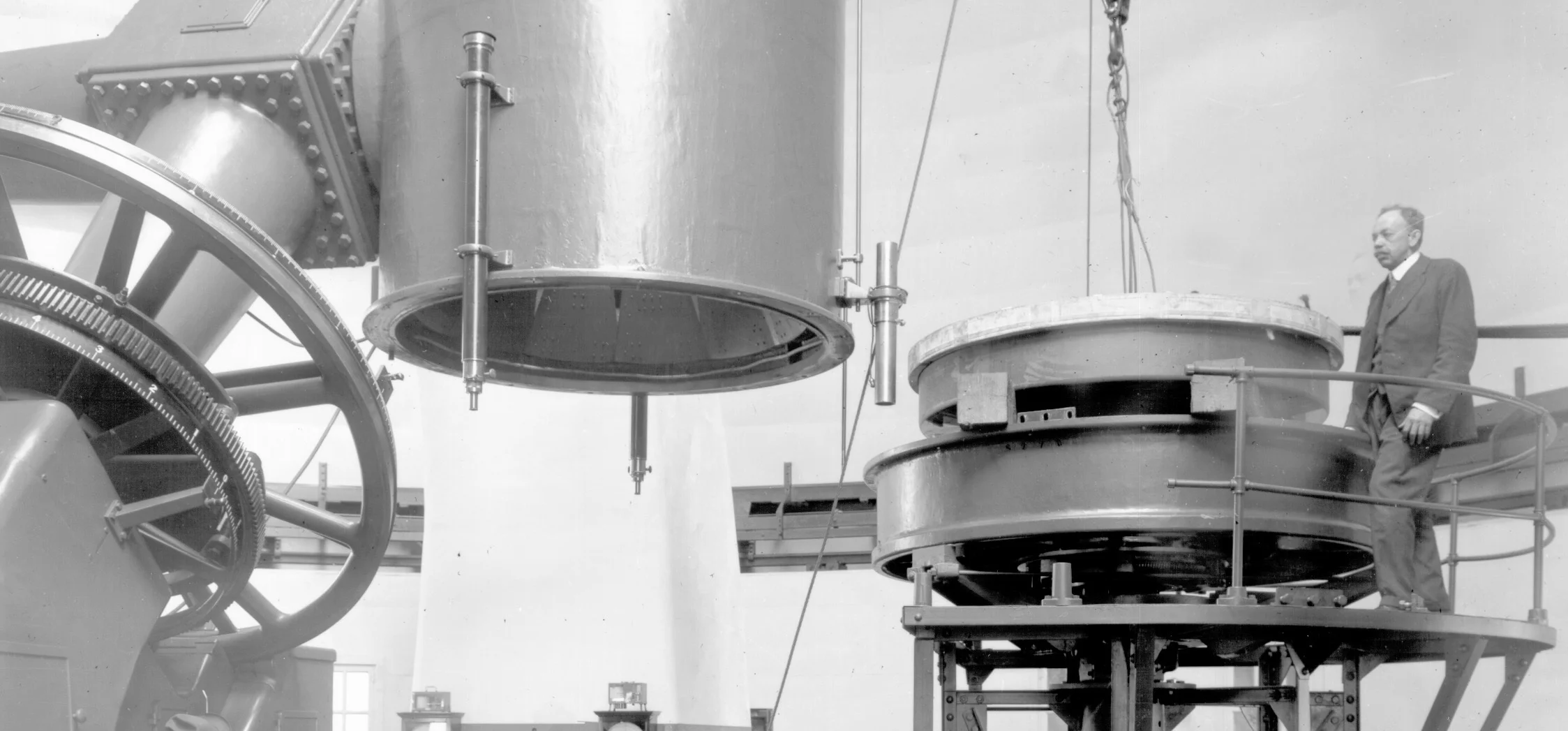
The Victoria telescope was the most technologically advanced telescope of its time. Plaskett designed the telescope so it could point to any location in the sky (not all telescopes of the time could). The engineering of the telescope was also key to success at the DAO. An astronomer working with a night assistant was able to move the telescope and begin exposing a new target within two minutes - far faster than contemporary instruments. The telescope was a very efficient machine!
-
The DAO opened in May 1918. The world’s largest operational telescope was the preserve of astronomers J.S. Plaskett and R.K. Young, and night assistant Thomas Tennant Hutchison. who immediately began observations. In coordination with the Mt. Wilson Observatory in California, they began an ambitious 800 star, multi-year observing program to measure radial velocities. They were joined by William Harper in 1919. Using the efficient new telescope they were able to expose 1800 photographic plates and measure 1000 of them by the time Harper arrived. Plaskett's son, Harry, returned from the Great War in 1919, joining the observatory in August. He immediately participated in the observing program, and over the following years made several exciting contributions to stellar spectroscopy.
-
John Stanley Plaskett (1865-1941), who conceived and designed the 1.8m telescope that now bears his name was an internationally recognized scientist and a strong proponent of public science outreach.
He was born on an Ontario farm, and developed an interest in mechanical engineering and astronomy. He did a degree in physics at the University of Toronto and was hired by Chief Astronomer Wlliiam King to work in the Dominion Observatory, where he developed his dream for a great Canadian reflecting telescope.
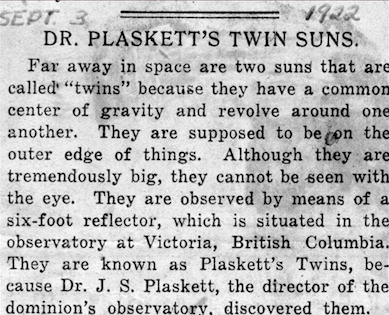
In 1921, after the telescope was up and running, Plaskett found an object that captured the public imagination: Plaskett’s Star, a pair of massive stars circling one another. He estimated that the total mass was 140 times the mass of the sun, and the stars, orbiting in 14.5 day were 27,000 brighter than the sun. This discovery made him a celebrity and put the Observatory on the global map, covered as it was in prominent newspapers in the US and the UK too.
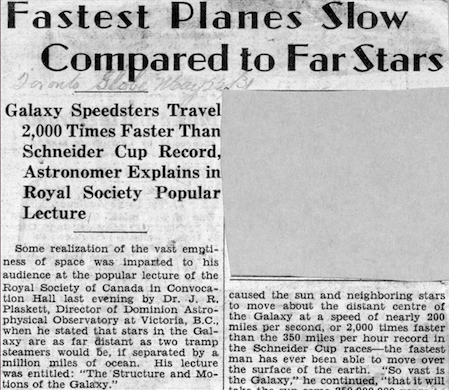
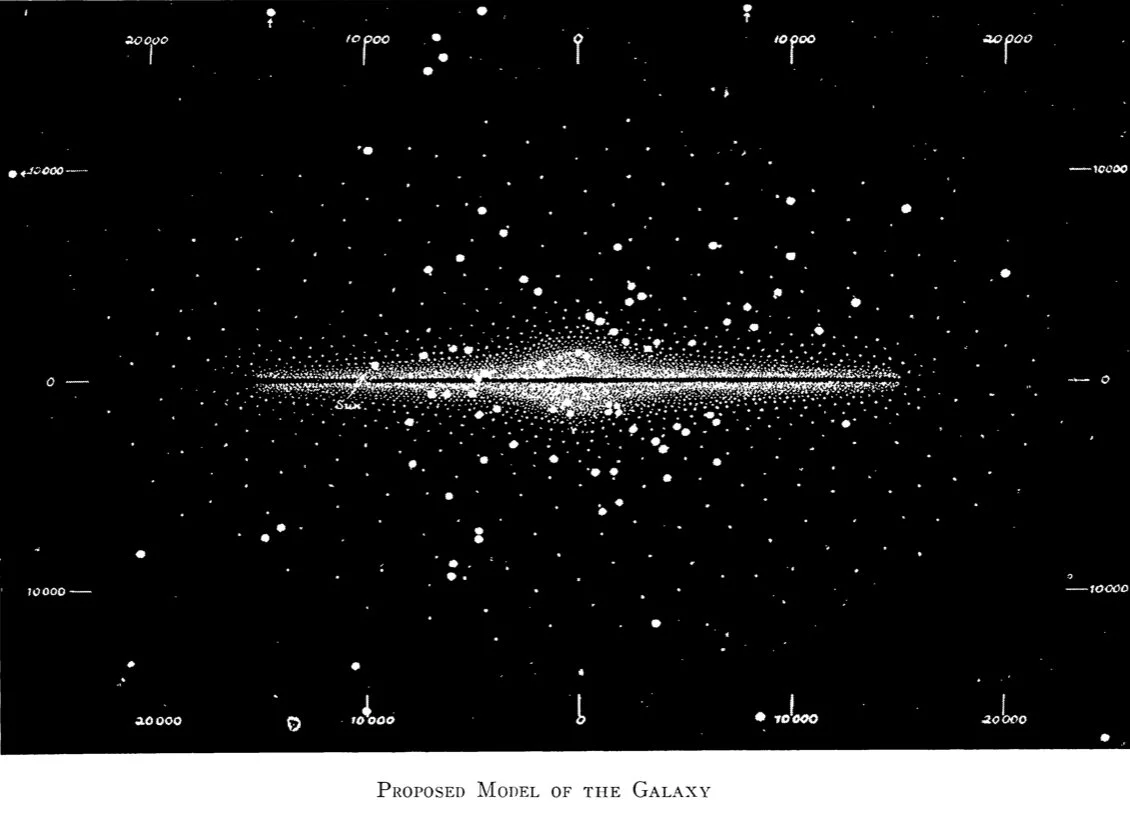
Driven by the desire to understand the structure and shape of the Milky Way Galaxy, Plaskett and Pearce worked throughout the 1920. They discovered that the galaxy rotates once every 240 million years and that our solar system was on the outskirts of a spiral galaxy.
That also meant, to the astonishment of the general public, that the Earth was whipping about the galaxy at breakneck speed!
Plaskett gained many accolades and awards for his work. He was also in the public eye as a great promoter of public engagement and the advancement of Canadian astronomy.
-
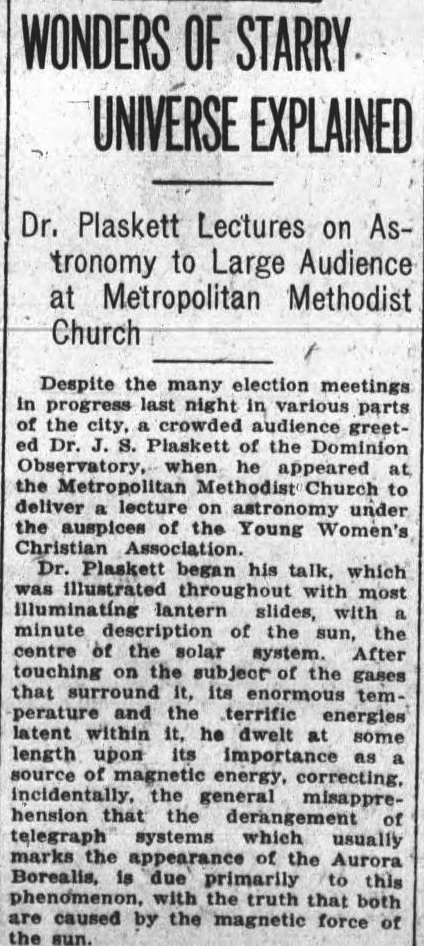
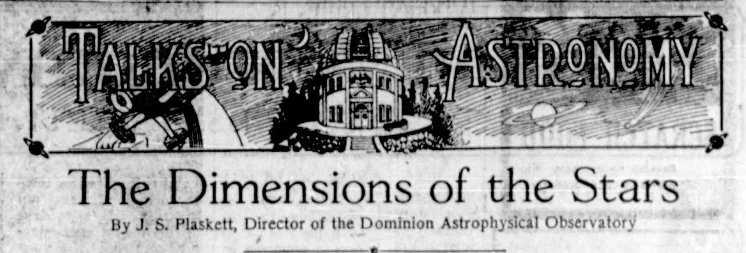
During the early 1920's, the daily Colonist ran bi-weekly 'Astronomy Talks' columns to inform Victorians on the progress of science at the observatory. This practice, as well public talks on astronomy, continued throughout the 1930's. Also in the 1920’s W.E. Harper embraced the latest technology of radio to conduct regular broadcasts over the CFCT on current understandings in astronomy.
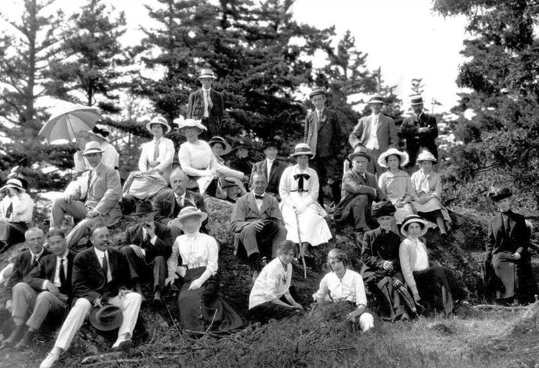
The telescope was widely visited throughout the 1920's, hosting tourists, visiting scientists, and contributing to incredible astrophysical discoveries. Despite being eclipsed in size by the Hooker 100" telescope on Mt. Wilson, the DAO remained the largest telescope an 'ordinary visitor' could look through. Due to extensive engagement efforts, public interest in the telescope steadily increased throughout the 1920's. In 1925, Plaskett reported that 25,000 visitors had travelled to the DAO each year since it was built. By 1929, this figure increased to nearly 40,000. -
In 1922, astronomer R.K. Young represented the DAO on the Canadian eclipse expedition in Western Australia. The Canadian team captured several clear images, and successfully measured the gravitational bending of starlight passing the sun, thus confirming the expectations of Einstein's Theory of General Relativity. The story was told in the recent documentary Bending Light, available for streaming on Superchannel until November 2025
With the initial radial velocity program proceeding smoothly, the staff at DAO began to investigate one of the biggest puzzles of astrophysics: the structures of the Milky Way galaxy. Plaskett led this work which would result in the the greatest scientific achievement of Plaskett and the DAO.